
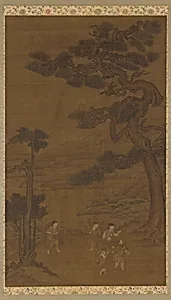
Landscape: handicraftsmen under a great pine tree
16th-17th century
Classification
Painting
Department
Smithsonian Collection
Museum
Smithsonian American Art Museum
Credit
Gift of Charles Lang Freer
Accession Number
F1916.585
Rights
Public Domain
Tags
About this artwork
To 1916
Art Historical Context
Nestled in the Smithsonian American Art Museum's collection, *Landscape: Handicraftsmen under a Great Pine Tree* is a captivating 16th-17th century Chinese painting from the Ming dynasty (1368–1644). Acquired as part of Charles Lang Freer's esteemed collection and gifted to the museum before 1916, it exemplifies the era's reverence for nature and human endeavor. Freer, a pioneering American industrialist and collector, amassed thousands of Asian artworks, bringing treasures like this to U.S. audiences and fostering cross-cultural appreciation. The composition likely portrays skilled handicraftsmen laboring beneath a towering pine tree—a enduring symbol in Chinese art of longevity, resilience, and the scholar's steadfast spirit. Ming dynasty landscapes often harmonized human figures with vast natural scenes, using delicate brushwork to evoke philosophical ideals of balance between work and the cosmos. This painting reflects that tradition, blending everyday toil with poetic grandeur amid misty hills and ancient trees. Though the artist and medium remain unknown, its presence in the Freer collection underscores the Ming period's artistic zenith, when painters elevated landscape genres to profound cultural expressions. A quiet reminder of China's artistic legacy, it invites visitors to ponder the timeless interplay of craft, nature, and harmony.
About the Artist
Unknown
The artist designated as "Unknown" in our virtual museum's collection exemplifies a poignant chapter in art history: creators whose identities have faded into obscurity despite the enduring power of their work. With only one known artwork attributed to them in our holdings, this figure represents countless anonymous hands that shaped visual culture across centuries. Museums worldwide, including th...