
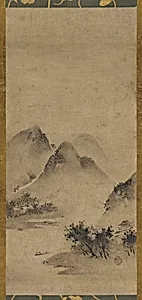
Landscape
16th century
Classification
Painting
Department
Smithsonian Collection
Museum
Smithsonian American Art Museum
Credit
Gift of Charles Lang Freer
Accession Number
F1904.365
Rights
Public Domain
Tags
About this artwork
To 1904
Art Historical Context
This evocative landscape painting, attributed to the renowned Kano Motonobu (1476–1559), offers a window into the refined aesthetics of Japan’s Muromachi period (1333–1573). As a master of the influential Kano school, Motonobu helped shape a distinctive style that blended Chinese ink-painting traditions with native Japanese sensibilities. Created in the 16th century as a kakemono, or hanging scroll, the work would once have been displayed in a temple alcove or refined domestic setting, inviting quiet contemplation. Motonobu’s landscapes typically employ fluid brushwork and subtle tonal gradations to suggest misty mountains, flowing water, and sparse vegetation—elements that reflect Zen Buddhist ideas of harmony with nature. Though the exact medium remains unrecorded, such scrolls were most often executed in ink on paper or silk, allowing the artist’s expressive lines to convey both grandeur and intimacy. The painting’s presence in the Smithsonian American Art Museum stems from the generosity of collector Charles Lang Freer, whose gifts helped introduce American audiences to the depth of Japanese artistic achievement. Beyond its visual poetry, the scroll embodies the cultural exchange that defined Muromachi art, when samurai patronage and Zen monasteries fostered new forms of expression. Viewers today can still sense the timeless invitation to pause and appreciate the quiet power of the natural world.