
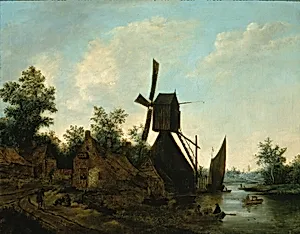
Landscape (Windmill)
17th century
Medium
Painting
Classification
Painting
Department
Smithsonian Collection
Museum
Smithsonian American Art Museum
Credit
Smithsonian American Art Museum, Bequest of Ruth Felton Sowers
Accession Number
1971.452
Rights
Public Domain
Tags
Art Historical Context
Step into the tranquil world of 17th-century Dutch painting with *Landscape (Windmill)*, an evocative work by an unidentified Dutch artist from the Golden Age of Netherlands art. Created during a time of economic prosperity and cultural flourishing, this painting captures the flat, watery expanses that defined Dutch life, where innovative engineering like windmills powered daily existence—from milling grain to draining polders for farmland. These iconic structures, silhouetted against vast skies, became symbols of national pride and ingenuity in art. The composition draws viewers into a serene afternoon scene along shimmering water, featuring a prominent windmill, a rowboat gliding peacefully, and a small figure group adding human scale and narrative warmth. Likely executed in oil on canvas—a favored medium for its luminous effects and durability—this anonymous masterpiece exemplifies the era's shift toward realistic landscapes over religious themes, influenced by artists like Jacob van Ruisdael. Such works celebrated the beauty of the ordinary, reflecting a prosperous society's fascination with nature's harmony. Now housed in the Smithsonian American Art Museum through the generous bequest of Ruth Felton Sowers, this painting invites reflection on how everyday scenes endure as cultural treasures, reminding us of the Dutch mastery in capturing light, atmosphere, and quiet drama.