
Landscapes in the styles of ancient masters
17th century
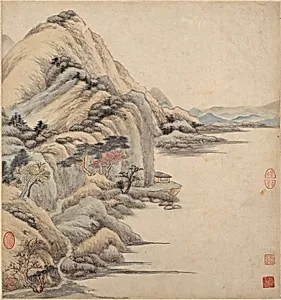
Medium
Album of eighteen leaves; ink and color on paper
Dimensions
11 3/4 x 12 3/8 in. (29.8 x 31.4 cm)
Classification
Paintings
Culture & Period
China · Qing dynasty (1644–1911)
Department
Asian Art
Museum
Metropolitan Museum of Art, New York, NY
Credit
Edward Elliott Family Collection, Gift of Douglas Dillon Gift, 1989
Accession Number
1989.235.2a–u
Rights
Public Domain
Tags
Art Historical Context
Wang Jian's *Landscapes in the Styles of Masters* is a captivating album of eighteen leaves, created in the 17th century during China's Qing dynasty (16441911). Rendered in ink and color on paper each leaf measures about 11¾ x 12⅜ inches, forming an intimate collection ideal for scholarly contemplation. As one of the esteemed "Four Wangs"—a group of influential painters who championed classical traditions—Wang Jian masterfully emulated the styles of revered Song and Yuan dynasty artists, blending misty mountains, serene rivers, and layered vistas in the timeless *shanshui* (mountain-water) tradition. This work exemplifies the Qing era's reverence for antiquity, where artists like Wang sought to preserve and refine the orthodox lineage of Chinese painting. Techniques such as delicate ink washes for atmospheric depth and subtle colors for foliage and rocks highlight his technical virtuosity, evoking the grandeur of nature while inviting viewers into poetic reveries. Albums like this were prized by literati collectors for their portability and sequential unfolding, fostering personal meditation on harmony between humanity and the cosmos. Housed in the Metropolitan Museum of Art's Asian Art Department as part of the Edward Elliott Family Collection (gift of Douglas Dillon, 1989), this piece underscores the enduring cultural importance of landscape painting in China, symbolizing philosophical ideals of impermanence and balance. Visitors will appreciate its nod to centuries-old mastery, bridging past and present.
About the Artist
Wang Jian · 1609–1677
Wang Jian (1609–1677) was a leading Chinese landscape painter of the late Ming and early Qing dynasties, born into a prominent literati family in Taicang, Jiangsu province. As the great-grandson of the distinguished scholar, official, and collector Wang Shizhen, he inherited a rich assemblage of ancient masterpieces that shaped his artistic vision from an early age. After earning the juren degree ...