
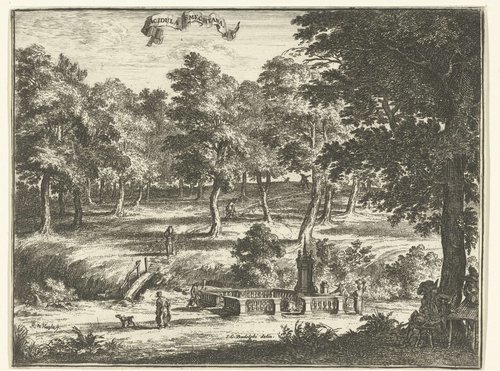
Landschap met de bron 'Acidula Smechtana'
1672
Medium
etching
Dimensions
173; 132
Rights
Public Domain
About this artwork
height 132 mm x width 173 mm
Art Historical Context
Step into the serene world of Romeyn de Hooghe's *Landschap met de 'Acidula Smecht'* (Landscape with the Spring 'Acid Smechtana'), a etching from 1672 Measuring just 132 mm high by 173 mm wide, intimate print captures a pastoral scene centered on a named spring—likely evoking the refreshing, slightly acidic waters suggested by "Acidula." De Hooghe, a versatile Dutch artist active during the Golden Age (1645–1708), was renowned for his prolific output in etching, blending intricate landscapes with satirical and illustrative works. Created amid the turbulent "Disaster Year" of 1672, when Dutch Republic faced invasion by France and England, this piece reflects the era's escapist fascination with nature. De Hooghe's Baroque style shines through in his fluid lines and atmospheric depth, hallmarks of Dutch landscape printmaking that made art accessible beyond paintings. Etching's acid-bitten technique allowed de Hooghe to achieve fine textures—from shimmering water to lush foliage—democratizing high art via affordable prints. A gem for collectors, it embodies the Dutch mastery of capturing fleeting natural beauty, inviting us to pause at the spring's edge.
About the Artist
Romeyn de Hooghe · 1645–1708
Romeyn de Hooghe (1645-1708) was a Dutch Baroque engraver, draughtsman, and political satirist who became the most prolific and versatile graphic artist of the Dutch Republic in the late seventeenth century. Born in Amsterdam, he rose to become one of early modern Europe's most important printmakers and a pioneering master of political satire. De Hooghe's significance extends far beyond his techn...