
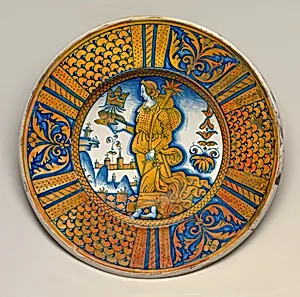
Large dish with segmental border of plant sprays and scale pattern; in the center, an emblematic female figure holding a crowned toad and cornucopia
c. 1510/1540
Medium
tin-glazed earthenware (maiolica)
Dimensions
overall (diameter): 40.3 cm (15 7/8 in.)
Classification
Decorative Art
Department
CSD
Museum
National Gallery of Art, Washington, D.C.
Credit
Widener Collection
Accession Number
1942.9.317
Rights
Public Domain
Art Historical Context
This stunning large maiolica dish, produced in Deruta around 1510–1540, exemplifies the Renaissance mastery of Italian tin-glazed earthenware.ailing from Deruta, a Umbrian center renowned for its vibrant pottery workshops, the 40.3 cm diameter piece features a decorative border of segmental plant sprays and intricate scale patterns framing a central emblematic female. She holds a crowned toad in one hand and a cornopia in the other— rich with potential meaning, evoking themes of abundance, fertility, and perhaps alchemical or heraldic motifs popular in the era. Maiolica's tin-glaze technique allowed artists to achieve brilliant blues, greens, and yellows on earthenware, fired at low temperatures for a glossy, durable finish ideal for both display and use. Deruta's 16th-century output, part of the Italian Renaissance's decorative arts boom, blended Islamic influences with local innovation, making such dishes prized status symbols in wealthy households across Europe. From the Widener Collection at the National Gallery of Art, this dish invites us to ponder its narrative symbolism while celebrating the craftsmanship that turned everyday objects into artistic treasures. A true window into Renaissance Italy's cultural splendor! (198 words)