
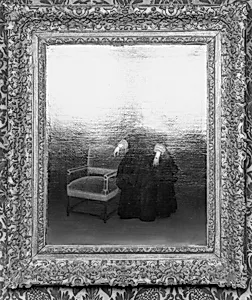
Late 17th-century style Ogee frame
Unknown Artist
1870–80
Medium
Oak lower moldings; lime upper moldings. Carved, gilt; orange-red bole.
Dimensions
Overall: 44 5/16 × 37 3/8 in. (112.5 × 95 cm) Sight: 31 1/4 × 24 15/16 in. (79.3 × 63.4 cm) Rabbet: 32 9/16 × 26 5/16 in. (82.7 × 66.8 cm)
Classification
Frames
Culture
French
Department
Robert Lehman Collection
Museum
Metropolitan Museum of Art, New York, NY
Credit
Robert Lehman Collection, 1975
Accession Number
1975.1.2371
Rights
Public Domain
Art Historical Context
This elegant ogee frame, created between 1870 and 1880, revives the refined style of late seventeenth-century French design while reflecting the nineteenth century’s fascination with historical revival. Crafted from oak for the lower moldings and limewood for the upper sections, the frame features intricate carving and traditional water gilding over an orange-red bole ground. The warm bole not only enhances the richness of the gold but also allows subtle highlights and shadows to emerge, giving the surface a lively, luminous quality typical of French Baroque frames. Although the artist remains unknown, the piece demonstrates the high level of craftsmanship practiced by frame makers of the period, who often produced such works for important collections. Its proportions and profile were carefully calculated to complement paintings from the Louis XIV era, underscoring how frames were regarded as integral extensions of the artworks they surround rather than mere borders. Today, this frame forms part of the Robert Lehman Collection at The Metropolitan Museum of Art. It offers visitors a tangible connection to both seventeenth-century aesthetics and the nineteenth-century revival movement that helped preserve and reinterpret earlier decorative traditions.