
Laurentius wordt levend geroosterd bij marteldood
1505 - 1507
Medium
paper
Dimensions
162; 237
Rights
Public Domain
About this artwork
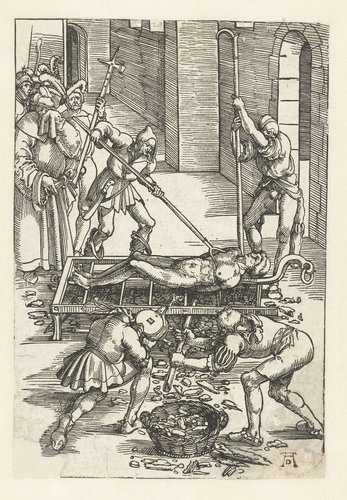
De naakte Laurentius wordt levend geroosterd onder toeziend oog van een Romeinse prefect en zijn gevolg. Mannen rakelen het vuur onder het rooster op en wakkeren het met een blaasbalg aan. Een man duwt Laurentius met een vork in een liggende pose op het rooster.
Art Historical Context
**Laurentius wordt levend geroost bij marteldood**Laurentius Roasted Alive at His Martyrdom), created by Hans Baldung G between 1505 and1507, is a ink drawing on paper measuring just 237 × 162 mm. This work by the German Northern Renaissance artist captures the gruesome martyrdom of Saint Lawrence, a 3rd-century deacon roasted on a gridiron under the watchful gaze of a Roman prefect and his entourage. Baldung vividly depicts the saint's naked, prone body prodded by a fork, while attendants stoke the flames with bellows and rakes, emphasizing the raw brutality of the scene. Saint Lawrence's death in 258 AD became a powerful symbol of Christian endurance during Roman persecution, inspiring countless artworks in medieval and Renaissance Europe. As a young artist apprenticed under Albrecht Dürer, Baldung Grien infused this drawing with the Northern Renaissance's hallmark detail and emotional intensity—think intricate line work conveying torment and flickering firelight. His fascination with macabre subjects shines here, reflecting the era's religious devotion amid looming Reformation tensions. This compact yet harrowing piece, likely a study or devotional image, underscores the gridiron's cultural resonance—Lawrence is the patron saint of cooks and firefighters. Baldung's unflinching realism invites viewers to confront faith's ultimate test, blending piety with visceral drama in a format perfect for intimate contemplation.
About the Artist
Hans Baldung Grien
Hans Baldung, known by the nickname Grien, was born around 1484 or 1485 in Schwäbisch Gmünd, in the Swabia region of what is now Germany. He came from a distinguished academic family — his father Johann Baldung was a university-educated jurist who served as legal adviser to the bishop of Strasbourg — making Hans a notable exception as the first male in his family not to attend university, and one ...