
L'École des veufs; Au Temps de la ballade
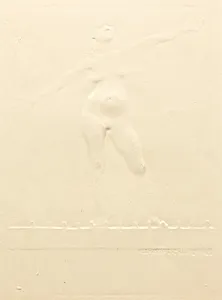
Medium
inkless embossing (gaufrage) on wove paper
Dimensions
plate: 22.5 x 15.9 cm (8 7/8 x 6 1/4 in.) sheet: 36.9 x 26 cm (14 1/2 x 10 1/4 in.)
Classification
Department
CG-E
Museum
National Gallery of Art, Washington, D.C.
Credit
Given in memory of Martin Atlas by his friends
Accession Number
1998.71.1
Rights
Public Domain
Art Historical Context
In the late 19th century, artist Alexandre Charpentier crafted *L'École des ve; Au Temps de laade* (1889), a delicate print evoking a poignant scene possibly inspired by literary or folk traditions—the title translates to "The of Widowers; In the Time of the Ball," hinting at themes of loss, memory, and melancholy ballads from bygone eras. Charpent, a multifaceted sculptor and printmaker active in Paris's vibrant art scene, bridged Symbolism and the emerging Art Nouveau, often exploring everyday human narratives with subtle emotional depth. This work stands out for its innovative medium: inkless embossing, or *gaufrage*, on wove paper. By pressing the design into the paper without ink, Charpentier created a tactile relief effect, where light and shadow play across the raised forms, emphasizing texture over color. Measuring just 22.5 x 15.9 cm on the plate, this intimate piece showcases the technical precision of 19th-century printmaking, a process that demanded exquisite craftsmanship to achieve such fine detail purely through pressure. Today, housed in the National Gallery of Art's CG-E department and given in memory of Martin Atlas by his friends, *L'École des veufs* invites visitors to appreciate how embossing transforms humble paper into a sculptural experience, bridging print and relief art in an era of artistic experimentation.