
Devant la rampe
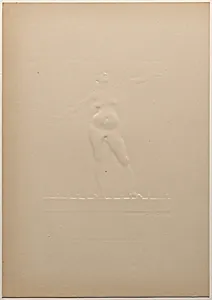
Medium
inkless embossing (gaufrage) on heavy wove paper
Classification
Department
CG-E
Museum
National Gallery of Art, Washington, D.C.
Credit
Virginia and Ira Jackson Collection, gift in memory of Virginia H. Jackson
Accession Number
1996.151.236
Rights
Public Domain
Art Historical Context
**Devant la rampe**, created by French artist Alexandre Charpentier in 1895, captures the theatrical allure of fin-de-siècle Paris. Charpentier, a sculptor and innovative printmaker aligned with the emerging Art Nouveau movement, often drew inspiration from everyday elegance and performance. The title, meaning "In Front of the Ramp" orBefore the Footlights," a backstage or stage moment, highlighting the grace of performers amid the era's booming café-concert and cabaret culture. This print stands out for its inkless embossing technique, known as *gaufrage*, executed on heavy wove paper. By pressing designs into the paper without ink, Charpentier creates a tactile relief that emphasizes form, texture, and shadow through light alone— a radical departure from traditional intaglio or lithography. This method underscores his experimental approach, bridging sculpture and printmaking, and reflects the late 19th-century fascination with craft and materiality in French decorative arts. Housed in the National Gallery of Art's Virginia and Ira Jackson Collection (gift in memory of Virginia H. Jackson), *Devant la rampe* exemplifies Charpentier's versatility. Visitors can appreciate how its subtle dimensionality invites close inspection, mirroring the intimate drama of theater itself. A gem of Symbolist-era innovation! (198 words)