
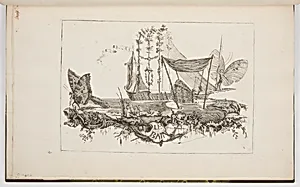
LE BAIN
Medium
Classification
Department
Smithsonian Collection
Museum
Smithsonian American Art Museum
Credit
Purchased for the Museum by the Advisory Council
Accession Number
1921-6-402-4
Rights
Public Domain
About this artwork
Research in Progress
Art Historical Context
**Le Bain** by Charles-Germain de Saintubin (French, 1721–1786) is a delightful 18th-century print created between 1753 and 1757, now housed in the Smithsonian American Art Museum's Smithsonian Collection. Acquired through the generosity of the Museum's Advisory Council, this work exemplifies the artist's skill as an engraver and draftsman during the height of the French Rococo period. Saint-Aubin, part of a prolific family of artists, was renowned for his intricate prints that captured the elegance and whimsy of everyday life under Louis XV. As a print, *Le Bain* ("The Bath") likely employs etching or engraving techniques, allowing for fine details and widespread dissemination—key to Rococo's dissemination of fashion, social customs, and intimate domestic scenes. The title evokes the sensual yet playful bathing motifs popular in mid-18th-century France, reflecting a cultural fascination with personal luxury and leisure amid the opulent Ancien Régime. This piece offers a window into pre-Revolutionary Parisian society, where art celebrated lighthearted frivolity. Though research continues, its presence in the Smithsonian underscores the enduring appeal of Saint-Aubin's precise, evocative style, bridging decorative arts and social commentary for modern viewers.