
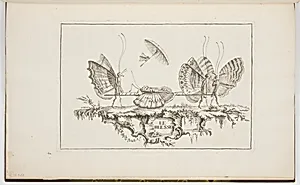
Le Blessé
Medium
Bound print
Classification
Bound print
Department
Smithsonian Collection
Museum
Smithsonian American Art Museum
Credit
Purchased for the Museum by the Advisory Council
Accession Number
1921-6-402-2
Rights
Public Domain
About this artwork
Research in Progress
Art Historical Context
**Le Blessé** (*The Wounded*), a bound print created by French artist Charles-Germain de Saint-A between 1753 and1757, captures the elegance of mid-18th-century Roc artistry. Saint-Aubin, a prolificaver and illustrator from a renowned family of artists (1721–6), specialized in delicate line work and whimsical vignettes that adorned books, albums, and decorative prints. This piece, now housed in the Smithsonian American Museum's Smithsonian Collection, the era's fascination with narrative scenes, likely depicting a poignant moment of injury amid the theatrical or martial themes popular in Enlightenment France. As a bound print—a technique where engravings were compiled into volumes for collectors—*Le Blessé* highlights the democratizing power of printmaking. These affordable multiples allowed intricate designs to reach wider audiences beyond oil paintings, blending fine art with book illustration. Crafted during the lead-up to the Seven Years' War, it may evoke the human cost of conflict through Saint-Aubin's precise etching, characteristic of his satirical yet empathetic style. Acquired through the Museum's Advisory Council, this work underscores the Smithsonian's commitment to preserving European graphic arts with American ties. Though research continues, *Le Blessé* invites visitors to ponder resilience and fragility in Rococo's graceful lines—a timeless reflection of 18th-century sensibilities. (198 words)