
Le Caracul (L'Astrakhan)
1860s
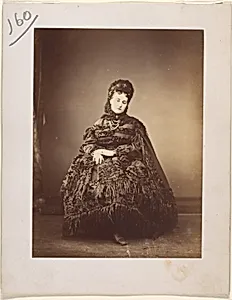
Medium
Albumen silver print from glass negative
Classification
Photographs
Department
Photographs
Museum
Metropolitan Museum of Art, New York, NY
Credit
David Hunter McAlpin Fund, 1975
Accession Number
1975.548.159
Rights
Public Domain
Tags
Art Historical Context
**Le Caracul (L'Astrakhan)**, captured by Pierre-Louis Pierson the 1860s, is a striking albumen silver print from a negative, showcasing the elegance of mid-19th-century portrait. Housed in the Metropolitan Museum of Art's Photographs Department, this work exemplifies the era's fascination with fashion and femininity, as hinted by its title referencing astrakhan—a luxurious, curly lambskin fur often featured in high-society attire. Pierson a prominent French photographer, specialized in intimate portraits of women, rendering them with remarkable clarity and poise. The albumen silver process, popular from the 1850s onward, used egg whites to bind light-sensitive silver salts to paper, producing rich tones and fine details ideal for cartes de visite and studio portraits. This medium democratized photography, allowing the elite to commission images that captured fleeting trends like fur-trimmed garments, blending artistry with emerging technology. As a portrait likely depicting a stylish woman in astrakhan finery, the photograph offers a window into Second Empire France's opulent culture, where such images served as fashion statements and social currency. Visitors will appreciate its timeless allure, preserved through the David Hunter McAlpin Fund in 1975. (198 words)
About the Artist
Pierre-Louis Pierson · 1822–1913
Pierre-Louis Pierson (1822–1913) was a pioneering French portrait photographer whose career spanned the formative years of the medium. Born on December 13, 1822, in Hinckange in the Moselle department, Pierson developed an early fascination with photography during the 1840s, as the daguerreotype was still in its infancy. His early life and formal training remain sparsely documented, but by 1844, h...