
Le Grand Russe
1860s
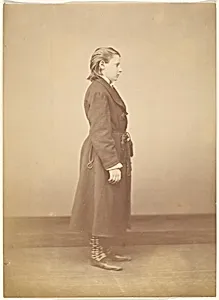
Medium
Albumen silver print from glass negative
Classification
Photographs
Department
Photographs
Museum
Metropolitan Museum of Art, New York, NY
Credit
David Hunter McAlpin Fund, 1975
Accession Number
1975.548.243
Rights
Public Domain
Tags
Art Historical Context
**Le Grand Russe**, captured by French photographer Pierre-Louis Pierson the 1860s, is a striking albumen silver print from a negative, showcasing the era's pinnacle of photographic precision. This intimate portrait depicts a young boy profile, his features rendered with exquisite clarity against a simple backdrop. Pierson, a master of the carte de visite format popularized by his mentor Disdéri, specialized in elegant portraits of high society, blending photography's realism with painterly poise. The albumen process, using egg whites to coat paper for superior tonal range and fine detail, revolutionized 19th-century imaging, making portraits affordable and sharable worldwide. Produced during the Second Empire under Napoleon III, such images reflected a cultural obsession with personal identity and exoticism—"Le Grand Russe" evokes a sense of noble Russian heritage, perhaps alluding to the boy's origins or a romanticized persona. As a highlight in the Metropolitan Museum of Art's photography collection (acquired via the David Hunter McAlpin Fund in 1975), this work exemplifies how profiles harkened back to ancient coins and sculptures, merging classical idealism with modern technology. Visitors will appreciate its timeless gaze, inviting reflection on childhood innocence amid Europe's gilded age.
About the Artist
Pierre-Louis Pierson · 1822–1913
Pierre-Louis Pierson (1822–1913) was a pioneering French portrait photographer whose career spanned the formative years of the medium. Born on December 13, 1822, in Hinckange in the Moselle department, Pierson developed an early fascination with photography during the 1840s, as the daguerreotype was still in its infancy. His early life and formal training remain sparsely documented, but by 1844, h...