
Le Lever
1726 to 1750
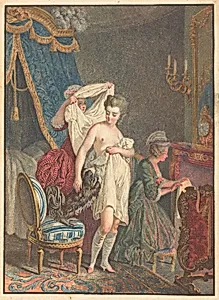
Medium
color stipple etching and etching
Classification
Department
CG-E
Museum
National Gallery of Art, Washington, D.C.
Credit
Widener Collection
Accession Number
1942.9.2190
Rights
Public Domain
Art Historical Context
**Le Lever** by Nicolas François Regn, created between 1726 and 1750, captures the intimate charm of 18th-century French daily life through a masterful color stipple etching etching. Housed in National Gallery of Art'sener Collection (Department CG), this print exemplifies Regnault's skill as a French engraver during the Rococo era, a time when art celebrated elegance, playfulness, and domestic scenes. The title, meaning "The Rising" or "Getting Up," depicts a graceful morning ritual, evoking the refined world of the aristocracy. Regnault's technique blends traditional etching lines with innovative stippling—tiny dots that create soft gradations of tone and color, mimicking the luminous effects of oil paintings. This method was revolutionary for printmaking, allowing affordable, vibrant reproductions that brought high art to wider audiences. Color stipple etching, perfected in France around this period, added a jewel-like quality, making prints like *Le Lever* prized collector's items. As part of the esteemed Widener Collection, this work highlights the evolution of printmaking from mere reproduction to an artistic medium in its own right, bridging painting and popular culture in pre-Revolutionary France. Visitors will appreciate its delicate beauty and glimpse into an era of lavish leisure.