
LE MARCHAND D'ORVIETAN
1723-1735
Classification
Bound print
Department
Smithsonian Collection
Museum
Smithsonian American Art Museum
Credit
Purchased for the Museum by the Advisory Council
Accession Number
1921-6-224-75
Rights
Public Domain
About this artwork
Research in Progress
Art Historical Context
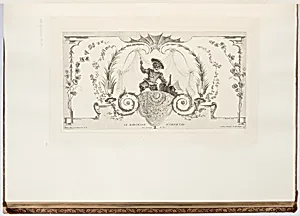
**LE MARCHAND D'ORVIETAN** *Antoine Watteau (French, 1684–1721), 1723–1735* Bound print, Smithsonian American Art Museum Antoine Watteau, a master of the Rococo style, captured the elegance and whimsy of 18th-century French life in his innovative *fêtes galantes*—dreamy scenes of courtship and leisure. *Le Marchand d'Orvietan*, meaning "The Orvietan Merchant," likely depicts a charismatic street vendor peddling Orvietan, a popular quack remedy from the Italian town of Orvieto. Such figures, blending theater and everyday commerce, reflect Watteau's fascination with commedia dell'arte performers and the transient joys of urban spectacle. Though Watteau died in 1721, this bound print dates to 1723–1735, suggesting it was produced posthumously from one of his designs, a common practice that extended his influence through engravings. As a bound print, this work highlights the era's reproductive techniques, allowing Watteau's delicate touch—fluid lines, soft lighting, and poised figures—to reach wider audiences via affordable multiples. Its presence in the Smithsonian American Art Museum's collection, purchased by the Advisory Council, underscores its value in bridging European Rococo with American holdings. With research ongoing, *Le Marchand d'Orvietan* invites us to ponder the artistry of illusion: a sly salesman whose pitch mirrors the enchanting, ephemeral world Watteau so masterfully evoked.