
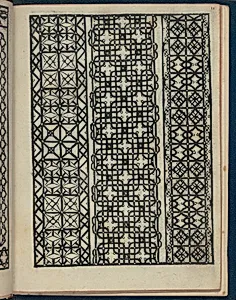
Le Pompe: Opera Nova, page 6 (recto)
Medium
Woodcut
Dimensions
Overall: 8 1/16 x 5 7/8 in. (20.5 x 15 cm)
Classification
Books|Prints|Ornament & Architecture
Department
Drawings and Prints
Museum
Metropolitan Museum of Art, New York, NY
Credit
Harris Brisbane Dick Fund, 1937
Accession Number
37.74(11)
Rights
Public Domain
Tags
Art Historical Context
This woodcut page comes from *Le Pompe: Opera Nova*, a 1557 pattern book printed in Venice by Giovanni Battista and Marchio Sessa. Measuring just over eight by five inches, the sheet belongs to a category of Renaissance publications known as ornament books, which supplied craftsmen with repeatable decorative motifs for lace, embroidery, architecture, and furniture. The crisp lines and rhythmic patterns typical of woodcut technique allowed these designs to be reproduced affordably and widely circulated. Printed at the height of the Italian Renaissance, such volumes played a vital role in spreading ornamental ideas across Europe. Venice’s thriving printing industry made pattern books like this one accessible to artisans who might never see the original luxury objects they imitated. The Met’s impression, acquired through the Harris Brisbane Dick Fund, preserves a single leaf that once guided the creation of elaborate textiles and architectural details now lost to time. Today the page offers visitors a glimpse into how Renaissance designers balanced invention with repetition, using a humble printing method to elevate everyday craftsmanship into an art of elegant proportion and delicate detail.
About the Artist
Giovanni Battista & Marchio Sessa
Giovanni Battista and Marchio Sessa were prominent Venetian printers, publishers, and booksellers active in the vibrant printing hub of Renaissance Venice from the mid-16th century through 1602. Operating as a family partnership—likely brothers or close kin—they contributed significantly to the dissemination of ornamental designs during a period when Venice dominated Europe's graphic arts scene. T...