
L'Education (Education)
1651 to 1700
Medium
etching and engraving
Classification
Department
CG-E
Museum
National Gallery of Art, Washington, D.C.
Credit
Rosenwald Collection
Accession Number
1951.10.28
Rights
Public Domain
Art Historical Context
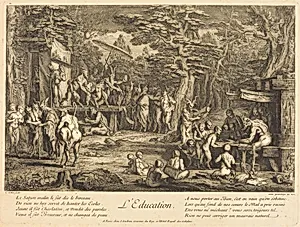
Claude Gillot's *L'Education (Education)*, etching and engraving from the 17th to early 18th century captures the artist's mastery of printmaking during a pivotal era in French art. Gillot (active c. 1673–1722), a influential engraver and painter, bridged the ornate Baroque style with the emerging lightness of Rococo. As the teacher of Antoine Watteau he pioneered scenes of gallant gatherings and moral vignettes, making this work a precursor to the fêtes galantes that defined later French decorative arts. Housed in the National Gallery of Art's Rosenwald Collection (Department CG-E), it exemplifies how prints democratized high art for wider audiences. The medium's dual technique—etching for its spontaneous, fluid lines etched with acid, combined with engraving's precise burin incisions—allowed Gillot to achieve rich tonal depth and intricate detail on a single copper plate. Prints like this were revolutionary, enabling affordable reproductions that spread artistic ideas across Europe. The title *L'Education* likely evokes a didactic scene, reflecting the era's emphasis on moral instruction amid courtly refinement. This charming print invites visitors to appreciate Gillot's technical virtuosity and cultural snapshot, reminding us how education in art history unfolds through such preserved treasures. (198 words)
About the Artist
Claude Gillot · 1673–1722
Artist known for his elegant designs done in the Rococo manner of Audran; also for his predilection for scenes from the 'comedia dell'arte.' Few paintings survive; his work is known mainly through drawings and etchings. Comment on works: Genre; History