
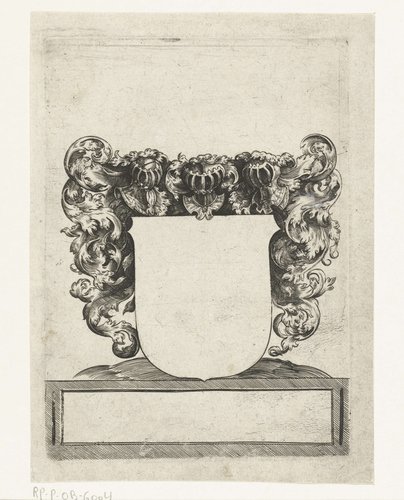
Leeg wapenschild
1550 - 1587
Medium
engraving
Dimensions
154; 113
Rights
Public Domain
About this artwork
collector's mark: Lugt 2228
Art Historical Context
**Leeg Wapenschild (Empty Coat of Arms)** *Abraham de Bruyn, ca. 1550–1587, Engraving, 154 × 113 mm* Step into the intricate world of 16th heraldry with Abraham de Bruyn's *Leeg Wapenschild*, an exquisite engraving depicting a blank coat of arms. Created in Antwerp during the Renaissance, when the Southern Netherlands buzzed with artistic innovation, this small yet precise work served as a versatile template. De Bruyn, a skilled engraver known for his ornamental designs and heraldic motifs, captured an ornate escutcheon frame—ready to be filled with family crests, symbols of nobility, or civic pride. The title, Dutch for "empty coat of arms," highlights its practical elegance, a blank canvas for personalization in an era obsessed with lineage and status. Engraving's fine lines and durability made it ideal for such designs, allowing widespread dissemination through printed books and broadsheets. De Bruyn's technique showcases the Renaissance mastery of intaglio printing, where intricate detailing on copper plates produced sharp, reproducible images prized by collectors and craftsmen alike. This piece reflects the cultural fervor for heraldry in Habsburg Europe, where shields embodied identity amid political upheavals like the Dutch Revolt. Bearing the collector's mark Lugt 2228—from a distinguished European collection—this modest engraving (just 15 cm tall) whispers tales of prestige and artistry, inviting us to imagine the emblems it once held.