
Left Leg Defense (Greave)
Unknown Artist
late 15th–early 16th century
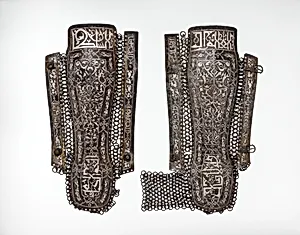
Medium
Steel, iron, silver, gold, tin, leather
Dimensions
L. 15 5/8 in. (39.7 cm); W. 4 1/4 in. (10.8 cm); Wt. 1 lb. 10 oz. (737g)
Classification
Armor Parts-Thigh and Leg Defense
Culture
Turkish, Istanbul (?)
Department
Arms and Armor
Museum
Metropolitan Museum of Art, New York, NY
Credit
Rogers Fund, 1990
Accession Number
1990.229
Rights
Public Domain
Tags
Art Historical Context
This exquisite Left Leg Defense, or greave, hails from late 15th– to early 16th-century Turkey, likely crafted in Istanbul during the height of the Ottoman Empire's military and artistic golden age. As a vital component of a warrior's armor, it protected the shin and calf from battlefield threats, reflecting the era's emphasis on both formidable defense and elegant design. Measuring just 15⅝ inches long and weighing a maneuverable 1 lb. 10 oz., it balanced protection with mobility for mounted or foot soldiers. Forged primarily from steel and iron for durability, the greave is enriched with silver, gold, tin, and leather—materials that highlight the opulence of Ottoman metalworking. Gilding and inlays, possibly featuring Arabic script as suggested by its tags, transformed functional armor into a status symbol for elite cavalry or Janissary troops. These techniques showcased the virtuosity of Istanbul's armorers, who blended Islamic decorative traditions with practical innovation. On view in the Metropolitan Museum of Art's Arms and Armor Department (Rogers Fund, 1990), this piece offers a window into the Ottoman world's fusion of warfare, artistry, and culture, where beauty fortified the brave.