
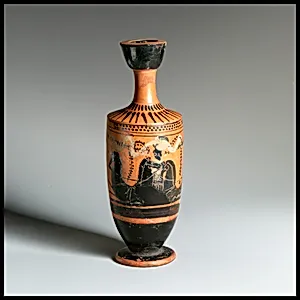
Lekythos
Unknown Artist
1st quarter of 5th century BCE
Medium
Terracotta
Dimensions
Diameter: 2 11/16 × 1 5/8 × 2 1/8 in. (6.8 × 4.1 × 5.3 cm) Height: 7 5/8 in. (19.4 cm)
Classification
Vases
Culture & Period
Greek, Attic · Late Archaic
Department
Greek and Roman Art
Museum
Metropolitan Museum of Art, New York, NY
Credit
Purchase, 1896
Accession Number
96.9.3
Rights
Public Domain
Tags
Art Historical Context
This delicate Attic lekythos, crafted from terracotta in the late Archaic period (first quarter of the 5 century BCE), exemplifies the pottery traditions of ancient Greece. Standing just 7 5/8 inches tall, lekythoi like this slender flask were designed to hold oils, perfumes, or unguents, often serving practical and ritual purposes in daily life and funerary rites. Produced in Athens, the cultural heart of the Greek world, such vases were exported widely, reflecting the era's burgeoning trade and artistic influence just before the Classical golden age. The unknown artist's work highlights Attic black-figure techniques—incising details into a glossy black slip over a fired clay body—though this transitional piece may bridge to emerging red-figure styles. Its decoration features horses, a motif symbolizing speed, power, and nobility in Greek mythology and elite burials, evoking chariot races or heroic scenes from epics like the Iliad. These vases were prized grave goods, placed in tombs to honor the deceased. Acquired by the Metropolitan Museum of Art in 1896, this lekythos offers a tangible link to Archaic Greece's vibrant worldview, where artistry merged beauty, utility, and spirituality for everyday rituals.