
Terracotta lekythos (oil flask)
late 6th–early 5th century BCE
Medium
Terracotta
Dimensions
H. 11 1/2 in. (29.2 cm)
Classification
Vases
Culture & Period
Greek, Attic · Archaic
Department
Greek and Roman Art
Museum
Metropolitan Museum of Art, New York, NY
Credit
Fletcher Fund, 1926
Accession Number
26.60.76
Rights
Public Domain
Tags
Art Historical Context
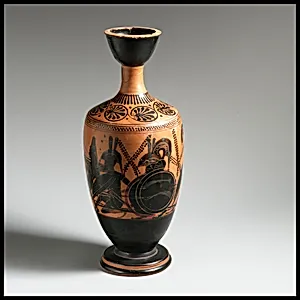
This elegant terracotta lekyth, or slender oil flask, stands just 11½ inches tall and hails from Attic Greece during the late Archaic period (late 6th–early 5th century BCE).ed as a practical vessel for storing perfumed oil—often used in daily rituals or as a funerary offering—its graceful shape exemplifies the refined pottery of ancient Athens. Attributed to the Painter of Vatican G.49 an anonymous master named after a similar vase in the Vatican collections, it showcases the black-figure technique, where figures are incised through a glossy black slip to reveal the red clay beneath, a hallmark of Archaic vase painting before the shift to red-figure. The decoration centers on soldiers with large round shields, evoking the heroic warriors of Greek mythology or epic battles like those in Homer's *Iliad*. These motifs were popular in Attic art, symbolizing valor, protection, and the martial prowess central to Greek identity amid the Persian Wars' looming shadow. The Painter of Vatican G.49's precise incisions and dynamic compositions highlight his skill in narrative storytelling on a small scale, bridging everyday utility with profound cultural storytelling. Acquired by The Metropolitan Museum of Art through the Fletcher Fund in 1926, this lekythos offers a vivid glimpse into Archaic Greek life, where beauty and function intertwined to honor both the living and the dead.