
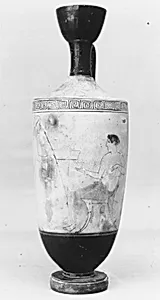
Lekythos
ca. 440–430 BCE
Medium
Terracotta
Dimensions
Overall: 11 11/16in. (29.7cm) Diameter: 3 15/16 × 2 1/16 × 2 7/16 in. (10 × 5.2 × 6.1 cm)
Classification
Vases
Culture & Period
Greek, Attic · Classical
Department
Greek and Roman Art
Museum
Metropolitan Museum of Art, New York, NY
Credit
Rogers Fund, 1915
Accession Number
15.165
Rights
Public Domain
Tags
Art Historical Context
This elegant Attic lekythos, crafted by the Thanatos Painter 440–430 BCE, exemplifies the refined artistry of Classical Greece. Named after an anonymous master vase-painter recognized by his distinctive style, it belongs to a group of slender terracotta vessels used to hold oils or perfumes, often placed in tombs as grave offerings. Standing about 11 11/16 tall, its graceful shape and subtle decoration reflect the Attic potters' mastery during Athens' golden age of democracy and cultural flourishing. The lekythos employs the rare white-ground technique, where a chalky slip created a luminous background for figures painted in black and diluted clay hues. This method, reserved for funerary wares, lent a soft, ethereal quality suited to themes of mourning and the afterlife—likely featuring women, as suggested by its motifs. The Thanatos Painter's work stands out for its poignant emotional depth, capturing intimate moments of grief with fluid lines and expressive poses. Housed in the Metropolitan Museum of Art's Greek and Roman Art Department (acquired via the Rogers Fund in 1915), this vase offers a window into ancient Greek rituals honoring the dead. It reminds us how everyday objects became vessels for profound cultural beliefs in mortality and memory.