
Lekythos (Oil Jar)
410-400 BCE
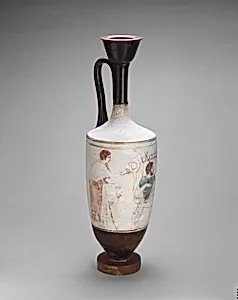
Medium
terracotta, white-ground
Dimensions
46.4 × 13.4 cm (18 1/4 × 5 1/4 in.); Diam.: 13.4 cm (5 1/4 in.)
Classification
vessel
Department
Arts of Greece, Rome, and Byzantium
Museum
Art Institute of Chicago
Accession Number
87666
Rights
Public Domain
About this artwork
Athenian cemeteries housed a variety of monuments and offerings to the dead. Examples include the marble tombstones and terracotta vessels, like this object. This vase, called a lekythos, held oil. From the middle until the end of the fifth century BC, they were usually decorated in a distinctive technique known as white ground, so called after the light slip coating on the body and shoulder of the vase. Atop this, figures were usually drawn in outline and then painted in rich colors, many of wh...
About the Artist
Ancient Greek
The artist known simply as "Ancient Greek" represents the anonymous masters of Attic vase painting, a cornerstone of Classical Greek art from the Archaic and Classical periods (circa 700–300 BCE). Little is known of their personal life, as ancient Greek potters and painters rarely signed their works or left biographical traces; early life and training remain not well documented. These creators ope...