
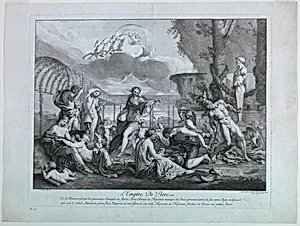
L'Empire de Flore
ca. 1680-1700
Medium
Classification
Department
Smithsonian Collection
Museum
Smithsonian American Art Museum
Credit
Smithsonian American Art Museum
Accession Number
1957-41-223
Rights
Public Domain
About this artwork
Research in Progress
Art Historical Context
Gérard Audran’s “L’Empire de Flore,” created between 1680 and 1700, is a fine example of French printmaking at the height of the Baroque era. As a reproductive engraving, the work would have helped circulate images of celebrated paintings across Europe, allowing viewers far from royal collections to study mythological subjects in detail. Audran, a leading engraver of his generation, specialized in translating the dramatic compositions and rich textures of oil paintings into the precise language of line and tone. Prints like this one played a vital cultural role in late-seventeenth-century France. They served both as affordable art objects for collectors and as teaching tools for artists and connoisseurs. The subject, drawn from classical mythology, reflects the period’s enduring fascination with ancient Rome and its gods—Flora, goddess of flowers, presiding over a realm of eternal spring. Today the impression belongs to the Smithsonian American Art Museum, where ongoing research continues to illuminate its exact source and significance. Visitors can appreciate how the medium itself—meticulous line work on paper—preserves the grace and vitality of a fleeting artistic moment for modern audiences.