
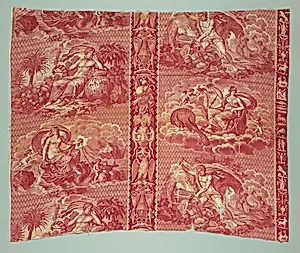
Les Quatre Elements
ca. 1810
Classification
printed, dyed & painted textiles
Department
Smithsonian Collection
Museum
Smithsonian American Art Museum
Credit
Smithsonian American Art Museum
Accession Number
1978-140-5
Rights
Public Domain
About this artwork
Research in Progress
Art Historical Context
**Les Quatre Éléments** by B. M. Lebert, created around 1810, invites visitors into the world of early 19th-century decorative arts through its classification as printed, dyed, and painted textiles. Little is known about the French-born artist (1759–1836), whose lifespan bridged the Enlightenment and Romantic eras, but this piece reflects a popular allegorical theme: the four classical elements—earth, air, fire, and water. Such motifs drew from ancient philosophy and Renaissance symbolism, often adorning homes and public spaces to evoke harmony between nature and humanity. The medium's layered techniques—printing for bold patterns, dyeing for rich colors, and hand-painting for intricate details—highlight the craftsmanship of textile production during Napoleonic France and the early American Republic. These methods allowed for vibrant, durable designs suitable for furnishings, curtains, or wall hangings, blending industrial efficiency with artistic flair. Held in the Smithsonian American Art Museum's collection, it exemplifies how European textiles influenced American tastes, bridging Old World elegance with New World innovation. Though research continues, *Les Quatre Éléments* captivates with its timeless exploration of elemental forces, reminding us of art's power to distill nature's essence into fabric. (198 words)