
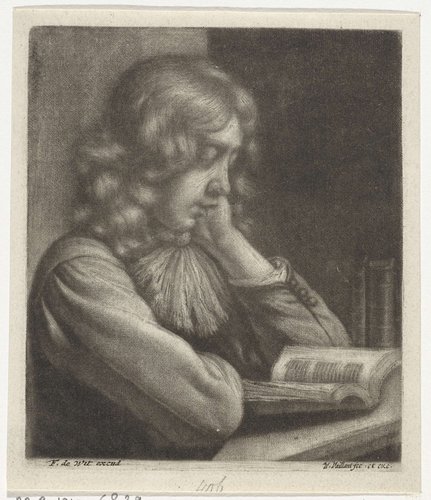
Lezende jongen
1658 - 1706
Medium
paper
Dimensions
144; 121
Rights
Public Domain
About this artwork
verzamelaarsmerk, verso, gestempeld: Lugt 2228
Art Historical Context
**Lezende Jongen (Reading Boy)** *Wallerant Vaillant, ca. 1658–1677, mezzotint on paper, 144 × 121 mm* Step into the intimate world of 17th-century Dutch artistry with Wallerant Vaillant’s *Lezende Jongen*, a delicate mezzotint depicting a young absorbed in reading. Vaillant, a master printmaker from the Dutch Golden Age, captured everyday moments with remarkable tenderness, elevating simple subjects into profound studies of light and concentration. This small-scale work, no larger than a modern postcard, invites viewers to ponder the quiet joys of learning amid the era’s flourishing intellectual culture. Vaillant’s innovation shines here: he pioneered mezzotint, a “dark manner” engraving technique that revolutionized printmaking by allowing velvety tonal gradations mimicking oil paintings. Invented around 1658, it produced rich shadows and subtle highlights, making affordable reproductions of portraits accessible to collectors. The verso bears a stamped collector’s mark (Lugt 2228), linking it to the prestigious Print Room of the Rijksmuseum in Amsterdam—a testament to its enduring value in one of the world’s great collections. This piece embodies the Baroque era’s focus on realism and human emotion, offering a window into Vaillant’s legacy as a bridge between painting and print. Perfect for savoring up close, it reminds us how art preserves fleeting moments of youthful curiosity.
About the Artist
Wallerant Vaillant · 1623–1677
Wallerant Vaillant (1623-1677) was a French-born Dutch Golden Age painter and printmaker who pioneered the mezzotint technique in printmaking. Born in Lille on May 30, 1623, he died in Amsterdam on August 28, 1677, leaving behind a significant legacy as both a portraitist and innovator in graphic arts. Vaillant holds a distinguished place in art history as one of the first professional artists to...