
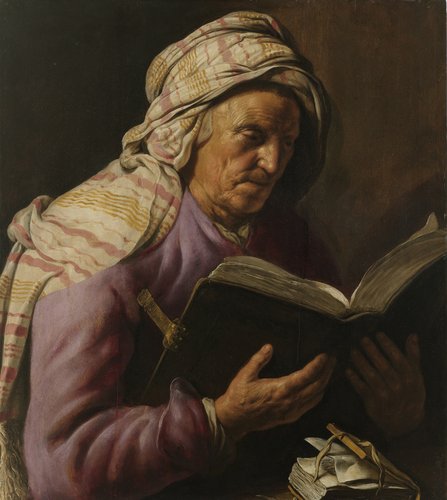
Lezende oude vrouw
ca. 1624 - ca. 1625
Medium
oil on panel
Dimensions
10.5; 70.5; 79
Rights
Public Domain
About this artwork
oil on panel
Art Historical Context
**Lezende Oude Vrouw (Reading Old Woman)** Jan Lievens, ca. 1624–1625, oil on, 79 × 70.5 cm* Step into the intimate world of Jan Lievens, a prodigious Dutch Golden Age painter who, at just 17 or 18, created this evocative portrait. Painted in Leiden around 1624–1625, *Lezende Oude Vrouw* an elderly woman absorbed in reading, her face illuminated by soft, dramatic light. Oil on panel—a favored medium for its smooth surface and luminous effects—allowed Lievens to achieve rich textures in her weathered skin and flowing garments, showcasing his early mastery of chiaroscuro, the interplay of light and shadow. Lievens, a close friend and contemporary of Rembrandt (with whom he shared a studio in Leiden), drew from Caravaggesque influences while developing his own bold style. This work exemplifies the *tronie*, a popular genre of expressive character studies that blurred portraiture and genre scenes, highlighting human emotion and everyday dignity. The woman's quiet concentration evokes themes of contemplation and wisdom, resonating in an era when literacy was a mark of introspection amid Holland's burgeoning intellectual culture. Housed in the Rijksmuseum, this panel reflects the innovative spirit of early 17th-century Dutch art, bridging youthful experimentation with timeless humanism. Visitors are drawn to its psychological depth, a testament to Lievens' brief but brilliant rivalry with Rembrandt.
About the Artist
Jan Lievens · 1607–1674
Jan Lievens (1607–1674) was born in Leiden and showed exceptional artistic promise from an early age, beginning his training with the local painter Joris van Schooten before traveling to Amsterdam around 1617 to study for two years under Pieter Lastman—the same teacher who would later instruct Rembrandt van Rijn. Lievens and Rembrandt, near-contemporaries born in the same city, subsequently shared...