
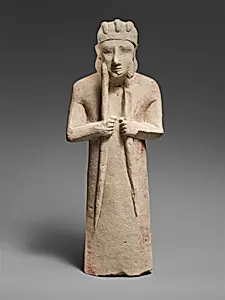
Limestone snake-charmer
Unknown Artist
1st half of the 6th century BCE
Medium
Limestone
Dimensions
WebPub GR 2012 Cesnola: 16 1/4 × 6 × 3 3/4 in., 6 lb. (41.3 × 15.2 × 9.5 cm, 2.7 kg)
Classification
Stone Sculpture
Culture & Period
Cypriot · Cypro-Archaic
Department
Greek and Roman Art
Museum
Metropolitan Museum of Art, New York, NY
Credit
The Cesnola Collection, Purchased by subscription, 1874–76
Accession Number
74.51.2529
Rights
Public Domain
Tags
Art Historical Context
Step into the enigmatic world of ancient Cyprus with this captivating *Limestone Snake-Charmer*, a stone sculpture from the Cypro-Archaic periodfirst half of the 6th century BCE). Carved from limestone by an artist, the figure stands 16 inches tall (.3 × 15. × 9.5), depicting a man in dynamic pose, seemingly coaxing or mesmerizing snakes—an motif that evokes rituals or folklore from this vibrant Mediterranean. Created during Cyprus's Cypro-Archaic I phase, the artwork showcases the island's distinctive sculptural tradition, where limestone's soft yet durable quality enabled intricate detailing in clothing folds, facial features, and sinuous snake forms. These small-scale stone figures were often votive offerings at sanctuaries, blending local styles with Near Eastern and early Greek influences, highlighting Cyprus as a cultural crossroads. Housed in the Metropolitan Museum of Art's Greek and Roman Art department as part of the Cesnola Collection (acquired 1874–76), this piece weighs just 6 pounds (2.7 kg) yet carries profound historical weight. It invites us to ponder the snake-charmer's role—perhaps a performer, priest, or symbol of harmony with nature—in everyday Cypriot life over 2,500 years ago. A true gem for contemplating ancient mysticism!