
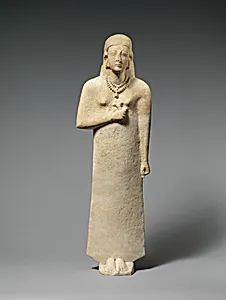
Limestone statue of a woman
Unknown Artist
early 6th century BCE
Medium
Limestone
Dimensions
WebPub GR 2012 Cesnola: 30 × 4 × 7 1/2 in., 20.5 lb. (76.2 × 10.2 × 19.1 cm, 9.3 kg)
Classification
Stone Sculpture
Culture & Period
Cypriot · Archaic
Department
Greek and Roman Art
Museum
Metropolitan Museum of Art, New York, NY
Credit
The Cesnola Collection, Purchased by subscription, 1874–76
Accession Number
74.51.2541
Rights
Public Domain
Tags
Art Historical Context
This elegant limestone statue of a woman crafted by an unknown Cypriot artist in the early 6 century BCE, stands as a captivating example of Archaic-period sculpture from ancient Cyprus. Measuring about 30 inches tall, the slender figure is adorned with intricate earrings and necklaces, of the era's fascination with jewelry that symbolized status and beauty. Carved from local limestone—a durable medium favored for its workability—this piece exemplifies the Cypriot tradition of monumental stone figures, blending influences from neighboring Greek, Near Eastern, and Egyptian cultures. During Cyprus's Archaic period (c. 750–475 BCE), such statues often represented priestesses, goddesses, or elite women, serving votive or funerary purposes in sanctuaries and tombs. The artist's technique likely involved roughing out the form with chisels before refining details like the jewelry, achieving a stylized rigidity typical of early stone carving before the more fluid Classical styles emerged. This reflects Cyprus's role as a cultural crossroads in the eastern Mediterranean, where trade fostered artistic innovation. Acquired as part of the renowned Cesnola Collection (1874–76) at The Metropolitan Museum of Art, this statue offers visitors a tangible link to Cyprus's vibrant ancient world, inviting reflection on the timeless allure of feminine adornment in antiquity.