
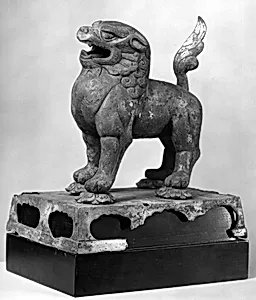
唐 鎏金青銅獅子|Lion
Unknown Artist
8th century
Medium
Bronze with traces of gilding
Dimensions
H. 9 3/4 in. (24.8 cm)
Classification
Sculpture
Culture & Period
China · Tang dynasty (618–907)
Department
Asian Art
Museum
Metropolitan Museum of Art, New York, NY
Credit
Gift of Abby Aldrich Rockefeller, 1942
Accession Number
42.25.31
Rights
Public Domain
Tags
Art Historical Context
This gilded bronze lion from China's Tang dynasty (618–), dating to the 8th, embodies the era's masterful metallurgy and cosmopolitan flair. Standing at a compact 9¾ inches (24.8 cm) high, the sculpture captures the lion's dynamic form—fierce yet graceful—with intricate detailing in its mane, muscles, and poised stance. The medium of bronze, enhanced by traces of gilding, reflects lost-wax casting techniques, where a gold-mercury amalgam was fired onto the surface for a luxurious sheen, reserved for elite patrons. In Tang China, a golden age of cultural exchange via the Silk Road, lions symbolized imperial power, protection, and Buddhist guardianship. Often placed at palace gates, tombs, or altars, these creatures warded off evil and conveyed strength. Though the artist remains unknown, the work's realism and vitality align with Tang sculpture's bold, naturalistic style, influenced by Central Asian motifs. A generous gift to the Metropolitan Museum of Art from Abby Aldrich Rockefeller in 1942, this lion invites visitors to marvel at Tang artistry's enduring elegance and the dynasty's worldly sophistication.