
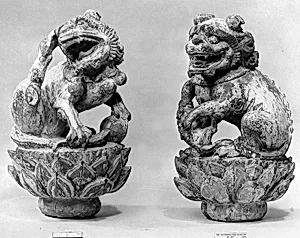
Lion Statuette
Unknown Artist
Medium
Wood
Dimensions
H. 7 1/2 in. (19.1 cm)
Classification
Sculpture
Culture & Period
China · Song dynasty (960–1279)
Department
Asian Art
Museum
Metropolitan Museum of Art, New York, NY
Credit
Rogers Fund, 1928
Accession Number
28.187.2
Rights
Public Domain
Tags
Art Historical Context
This charming Lion Statuette, carved from wood during China's Song dynasty (960–9), stands just 7½ inches (19.1 cm) tall, making it a delightful example of portable sculpture from the Asian Art collection at The Metropolitan Museum of Art. through the Rogers Fund in 8, it exemplifies the refined craftsmanship of a period often hailed as a golden age for Chinese arts, when scholars and artisans produced works blending elegance with everyday appeal. In Chinese culture, symbolized imperial power, protection against evil, and good fortune, frequently appearing as guardians at thresholds or in decorative arts. During the Song era, with its emphasis on naturalism and subtle expression, sculptors captured animals with lifelike poise and dynamic energy, moving away from earlier rigidity toward more fluid forms. This wooden piece likely served a domestic or ritual purpose, highlighting the dynasty's innovation in accessible, intimate art objects. The choice of wood as a medium underscores Song sculptural techniques, where carvers exploited the material's grain for texture and warmth, often polishing surfaces to a soft sheen. Though the artist remains unknown, the statuette's survival speaks to the enduring legacy of Song artistry, inviting visitors to ponder the lion's fierce yet protective gaze in a world of scholarly refinement.