
Lion Pendant
Unknown Artist
probably second half 19th century
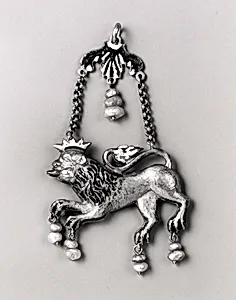
Medium
Gold, enamel and pearls.
Dimensions
H. 8.5 cm, W. 5 cm.
Classification
Jewelry, Precious Metals and Precious Stones
Culture
Western Europe
Department
Robert Lehman Collection
Museum
Metropolitan Museum of Art, New York, NY
Credit
Robert Lehman Collection, 1975
Accession Number
1975.1.1517
Rights
Public Domain
Tags
Art Historical Context
Nestled in the Robert Lehman Collection at the Metropolitan Museum of Art, the *Lion Pendant* is a example of 19th-century European jewelry craftsmanship. Crafted from gold, enamel, and pearls, this pendant measures 8.5 cm in height and 5 cm in width, the opulence of precious materials favored during the Victorian era's later decades. Its fierce lion motif, rendered with intricate enameling techniques, captures the beast in a dynamic pose, symbolizing strength, nobility, royal power—a common emblem in European heraldry and decorative arts. Produced probably in the second half of the 19th century by an unknown artist, the piece reflects the era's revival of historicism and naturalism in jewelry design. Enamelwork, likely cloisonné or champlevé, allowed for vibrant colors and fine details on the gold base, while pearls added a touch of luminous elegance. Such pendants were prized accessories for the elite, blending functionality with artistic expression. Today, this jewel from the 1975 gift to the Met highlights the artistry of precious metals and stones, inviting visitors to admire how everyday adornments embodied cultural ideals of majesty and might. A true treasure for lion enthusiasts and jewelry lovers alike!