
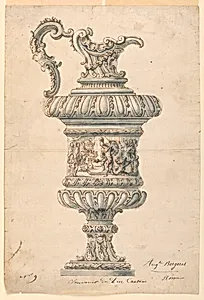
Lip-spout pitcher
1700–1725
Medium
tableware designs
Classification
tableware designs
Department
Smithsonian Collection
Museum
Smithsonian American Art Museum
Credit
Museum purchase through gift of various donors and from Eleanor G. Hewitt Fund
Accession Number
1938-88-2139
Rights
Public Domain
About this artwork
Research in Progress
Art Historical Context
Step into the elegant world of early 18th-century French design with Auguste Bergeret's *Lip-spout pitcher*, created between 1700 and 1725. This delicate tableware design, housed in the Smithsonian American Art's Smithsonian Collection, captures the refined craftsmanship of France's Louis XIV and early Regency eras. As a drawing or pattern for a functional pitcher with a distinctive lip-spout—ideal for pouring liquids gracefully— it exemplifies the period's blend of utility and artistry in everyday luxury objects. Tableware designs like this one were vital to the decorative arts, guiding silversmiths, potters, and enamelers in producing opulent pieces for aristocratic tables. Bergeret, a skilled French designer, contributed to a thriving tradition where form met function, often featuring sinuous shapes and ornate details that foreshadowed the Rococo style. Acquired through museum purchase with gifts from various donors and the Eleanor G. Hewitt Fund, this work highlights the meticulous planning behind grand dining experiences. Though research continues to uncover more about Bergeret's techniques and influences, the *Lip-spout pitcher* invites us to appreciate how such designs elevated the ordinary into the extraordinary, reflecting France's cultural prestige in design during a golden age of innovation.