
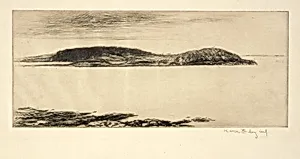
Little Knob
ca. 1926
Medium
Graphic Arts-Print
Classification
Graphic Arts-Print
Department
Smithsonian Collection
Museum
Smithsonian American Art Museum
Credit
Smithsonian American Art Museum, Gift of Mrs. Harry Katz in memory of Harry Katz
Accession Number
1977.66.49
Rights
Public Domain
Tags
Art Historical Context
Kerr Eby's *Little Knob* (ca. 1926) is a striking example of early 20th-century Americanmaking, housed in the American Art Museum's collection Gifted by Mrs. Harry Katz in memory her husband, this graphic arts print showcases Eby's mastery of etching a technique he honed to capture the nuanced textures and atmospheres of the natural world. As a prominent figure in the realist tradition, Eby—known for his World War I battlefield scenes and landscapes—produced works that bridged technical precision with emotional depth during the interwar period. The title evokes a modest hill or elevated landform, rendered with Eby's signature attention to light, shadow, and form, inviting viewers to contemplate the quiet grandeur of the American countryside. Etching allowed Eby to achieve intricate line work and tonal subtlety on a single plate, making prints like this accessible yet collectible art forms that democratized fine in the 1920s. *Little Knob* reflects the era's fascination with regionalism and the rise of printmaking as a respected medium, underscoring Eby's role in elevating graphic arts within institutions like the Smithsonian. A testament to enduring craftsmanship, it encourages us to pause and savor nature's subtle contours.
About the Artist
Kerr Eby · 1889–1946
Kerr Eby (1889–1946) was a Canadian-born American printmaker and painter who became one of the most accomplished etchers of his generation and a powerful chronicler of the experience of war. Born in Tokyo to Canadian parents, he grew up in New York and studied at the Pratt Institute and the Art Students League under George Bridgman. Eby volunteered for service in World War I and saw action in Fra...