
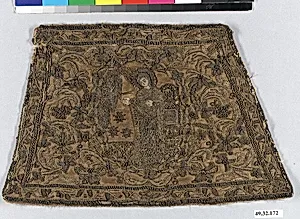
Liturgical cuff
Unknown Artist
17th century (?)
Medium
Silver and silver gilt on silk
Dimensions
9 3/4 × 6 in. (24.8 × 15.2 cm)
Classification
Textiles-Embroidered
Culture
Russo-Byzantine
Department
European Sculpture and Decorative Arts
Museum
Metropolitan Museum of Art, New York, NY
Credit
Anonymous Gift, 1949
Accession Number
49.32.172
Rights
Public Domain
Tags
Art Historical Context
This exquisite *Liturgical cuff*, crafted in the 17th (or thereabouts) by an unknown artist, hails from the Russo-Byzantine, blending Eastern Orthodox spirituality with masterful textile artistry. Measuring a modest 9¾ × 6 inches (24.8 × 15.2 cm), it features intricate embroidery of silver and silver gilt on luxurious silk—a technique prized for its shimmering, jewel-like effect that evoked heavenly radiance during religious ceremonies. As part of priestly vestments, such cuffs adorned the sleeves of liturgical garments, symbolizing purity and divine protection. Rooted in the opulent world of Russo-Byzantine culture, this piece reflects the era's devotion to iconography, likely centering on the Virgin Mary, a revered figure in Orthodox worship as the Theotokos (Mother of God). The use of precious metals on silk not only ensured durability for repeated use in church rituals but also underscored the hierarchy of sacred art: textiles like this were commissioned for their tactile splendor, complementing icons and frescoes. Donated anonymously to the Metropolitan Museum of Art in 1949, it offers a rare glimpse into the craftsmanship of Russian ecclesiastical workshops, where embroidery rivaled painting in devotional power. Today, in the European Sculpture and Decorative Arts department, this cuff invites us to appreciate the fusion of faith, fiber, and finery—a testament to how everyday adornment became transcendent in 17th-century Orthodoxy.