
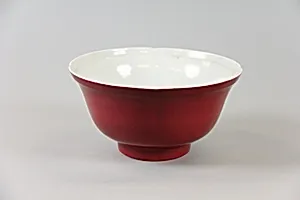
Lobed bowl
Unknown Artist
early 18th century
Medium
Porcelain with gold pink glaze (Jingdezhen ware)
Dimensions
H. 3 13/16 in. (9.7 cm); Diam. 7 1/2 in. (19.1 cm)
Classification
Ceramics
Culture & Period
China · Qing dynasty (1644–1911), Yongzheng period (1723–35)
Department
Asian Art
Museum
Metropolitan Museum of Art, New York, NY
Credit
Bequest of Flora E. Whiting, 1971
Accession Number
1971.180.248
Rights
Public Domain
Art Historical Context
This exquisite lobed bowl, crafted in the early 18th century during Yongzheng period (172–35) of China's Qing dynasty, exemplifies the pinnacle of imperial porcelain production at Jingdezhen, the world's renowned center for fine ceramics. Measuring just 3 13/16 inches high 7 1/2 inches in diameter its scalloped, flower-like lobes evoke the organic forms of nature, a popular motif in Qing decorative arts. The bowl's standout feature is its gold pink glaze—a luxurious famille rose enamel technique involving overglaze painting with pink hues derived from colloidal gold, fired at lower temperatures to achieve vibrant, translucent effects. Jingdezhen kilns, under imperial patronage, pushed porcelain innovation during the Yongzheng reign, blending technical precision with artistic elegance. This glaze, perfected in the period, symbolized opulence and was often reserved for palace use or elite export wares, influencing European porcelain makers like Meissen. Though the artist remains unknown, the bowl's flawless form and radiant color reflect the era's emphasis on refinement and harmony. Today, housed in the Metropolitan Museum of Art's Asian Art Department through the bequest of Flora E. Whiting in 1971, it invites us to appreciate Qing China's mastery—where clay met fire to create enduring beauty.