
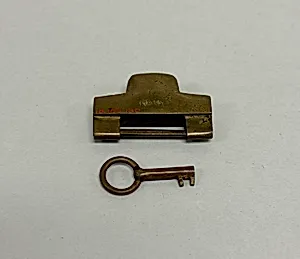
Lock and key
Unknown Artist
19th century
Medium
Brass
Dimensions
Padlock: H. 1 1/8 in. (2.9 cm); W. 1 5/8 in. (4.1 cm); D. 5/16 in. (0.8 cm) Key: 1 1/4 in. (3.2 cm)
Classification
Metalwork
Culture & Period
Japan · Edo (1615–1868) or Meiji period (1868–1912)
Department
Asian Art
Museum
Metropolitan Museum of Art, New York, NY
Credit
Rogers Fund, 1910
Accession Number
10.100.180
Rights
Public Domain
Art Historical Context
This exquisite brass padlock and key, crafted in 19th-century Japan during the late Edo (1615–1868) or early Meiji (1868–1912) period, exemplifies the masterful metalwork traditions of the time. Measuring just 1⅛ inches high and 1⅝ inches wide for the padlock, with a slender 1¼-inch key, this diminutive pair was likely designed for securing personal valuables, cabinets, or portable boxes—common in a society where privacy and portability mattered amid urban growth and trade. Japanese metalworkers, often from specialized guilds, excelled in brass casting and chasing techniques, transforming functional objects into subtle works of art. The lustrous brass, alloyed for durability and a warm golden sheen, reflects the era's blend of utility and refinement; Edo artisans prioritized harmony in everyday items, while Meiji innovations introduced Western influences without sacrificing precision. Acquired through the Rogers Fund in 1910, this piece now graces the Metropolitan Museum of Art's Asian Art collection, highlighting how even humble tools embodied cultural values of craftsmanship and impermanence. Visitors will appreciate its tactile intimacy—hold it in your palm and feel the weight of history, a testament to Japan's enduring legacy in metalwork.