
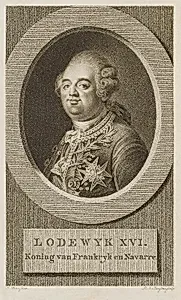
Lodewyk XVI
Medium
Graphic Arts-Print
Classification
Graphic Arts-Print
Department
Smithsonian Collection
Museum
Smithsonian American Art Museum
Credit
Smithsonian American Art Museum, Gift of John Gellatly
Accession Number
1929.7.65
Rights
Public Domain
Art Historical Context
"Lodewyk XVI" is a captivating print by Belgian artist Lambertus Anton Claessens, housed the Smithsonian American Art Museum's collection. Created as a graphic arts print—likely an engraving or etching—this work exemplifies the precision and detail achievable in 19th-century printmaking techniques. Claessens, for his skill in reproducing historical portraits, captures the essence of his subject through fine lines and tonal contrasts, a hallmark of the medium that allowed for widespread dissemination of imagery before photography dominated. The title "Lodewyk XVI" refers to Louis XVI, the ill-fated King of France whose reign ended dramatically during the French Revolution in 1793. Such prints were immensely popular in Europe and America, serving as both historical records and objects of fascination. They reflected a growing public interest in royal figures and revolutionary events, bridging art with cultural memory. Claessens' Belgian perspective adds an intriguing layer, as prints like this often circulated borders, influencing tastes in portraiture and historical narrative. Generously gifted to the Smithsonian by collector John Gellatly, this undated piece invites visitors to ponder the enduring allure of monarchy amid political upheaval. Its presence in the Graphic Arts collection underscores the museum's commitment to preserving ephemeral yet influential works that shaped visual culture.