
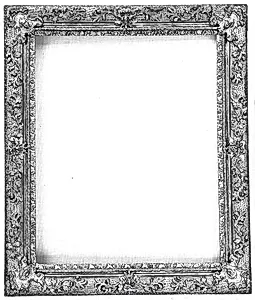
Louis XIV-style frame
Unknown Artist
ca. 1772
Medium
Poplar
Dimensions
Overall: 23 1/16 × 19 7/16 in. (58.6 × 49.4 cm) Sight: 18 × 14 3/8 in. (45.7 × 36.5 cm) Rabbet: 18 15/16 × 15 5/16 in. (48.1 × 38.9 cm)
Classification
Frames
Culture
Italian, Florence
Department
Robert Lehman Collection
Museum
Metropolitan Museum of Art, New York, NY
Credit
Robert Lehman Collection, 1975
Accession Number
1975.1.2223
Rights
Public Domain
Art Historical Context
This exquisite Louis XIV-style frame, crafted around 1772 in Florence, Italy, exemplifies the opulent woodworking traditions of the period. Made from poplar—a lightweight, carvable wood favored for its fine grain—the frame measures 23 1/16 × 19 7/16 inches overall, with a sight opening of 18 × 14 3/8 inches. Its design draws from the grand French Baroque aesthetic of the Sun King, Louis XIV (r. 1643–1715), featuring elaborate scrolling motifs, cartouches, and acanthus leaves that evoke the lavish frames of Versailles. Though the artist remains unknown, Florentine workshops were renowned for such virtuoso carving, blending local Renaissance precision with international influences. By the 1770s, as Neoclassicism gained traction, this frame represents a nostalgic revival of earlier royal splendor amid Italy's vibrant decorative arts scene. Frames like this were essential to 18th-century portraiture and history painting, elevating the artwork they enclosed and signaling the patron's status. Part of the Robert Lehman Collection at The Metropolitan Museum of Art since 1975, it highlights how frames were standalone masterpieces, their rabbet dimensions (18 15/16 × 15 5/16 inches) precisely tailored to fit canvases seamlessly. Today, this frame invites us to appreciate the unsung craft of frame-makers, whose intricate techniques preserved and enhanced paintings for generations, bridging art and architecture in opulent harmony.