
Luster-Painted Bottle
Unknown Artist
second half 17th century
Medium
Stonepaste; luster-painted on opaque white glaze, with silver fittings
Dimensions
H. 14 in. (35.6 cm) Diam. 7 1/2 in. (91.1 cm)
Classification
Ceramics
Department
Islamic Art
Museum
Metropolitan Museum of Art, New York, NY
Credit
H.O. Havemeyer Collection, Gift of Horace Havemeyer, 1941
Accession Number
41.199.4a, b
Rights
Public Domain
Tags
Art Historical Context
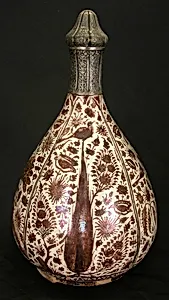
This exquisite *Luster-Painted Bottle from the second half of 17th century hails from the Islamic world, likely the Ottoman Empire or Safavid, where ceramics reached dazzling heights of sophistication. Standing 14 inches tall, its graceful form is adorned with delicate motifs of birds perched among flowering branches and slender cypresses—timeless symbols of paradise gardens Islamic culture, evoking serenity and the afterlife's lush abundance. Crafted from stonepaste, a fine fritware body prized for its durability and ability to mimic porcelain, the bottle features an opaque white glaze as its canvas. The masterful luster-painting technique, involving metallic oxides fired in a reducing atmosphere, creates a shimmering, iridescent glow that rivals gold and silver vessels. Elegant silver fittings enhance its luxury, suggesting it served as both a functional ewer and a status symbol for elite households. A gem of the Metropolitan Museum of Art's Islamic Art Department, gifted from the H.O. Havemeyer Collection in 1941, this bottle highlights the enduring innovation of Islamic potters. Lusterware, revived in the 17th century after earlier peaks in medieval Iraq and Syria, bridged art and alchemy, transforming everyday clay into treasures that captivated collectors worldwide.