
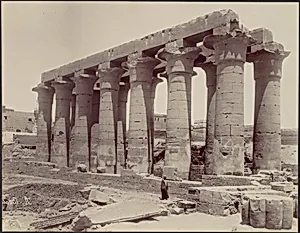
Luxor, vue du temple cote ouest
1870s
Medium
Albumen silver print from glass negative
Classification
Photographs
Department
Photographs
Museum
Metropolitan Museum of Art, New York, NY
Credit
Gift of Mrs. John L. Swayze, 1981
Accession Number
1981.1194.2
Rights
Public Domain
Tags
Art Historical Context
In the 1870s, Italian-born photographer Antonio Beato captured majestic west side of Luxor Temple in this striking albumen silver print from a glass. Titled *Luxor, vue du côte ouest*, the image showcases the temple's towering columns and ancient ruins, remnants of the grand sanctuary dedicated to the god Amun during Egypt's New Kingdom (c. 1550–1070 BCE). Beato, for his pioneering work documenting Egypt's archaeological treasures, positioned his camera to emphasize the dramatic scale and intricate carvings, inviting viewers into a world of pharaonic splendor. This photograph exemplifies 19th-century travel photography, a burgeoning art form fueled by Europe's Egyptomania after Napoleon's campaigns and the Suez Canal's opening. Albumen prints, made by coating paper with egg whites and silver salts, produced rich tonal depths and sharp details ideal for architectural subjects—perfect for reproducing fragile ruins for scholars, collectors, and tourists back home. Beato's glass negatives allowed for multiple high-quality prints, democratizing access to these wonders. Today, housed in the Metropolitan Museum of Art (gift of Mrs. John L. Swayze, 1981), this piece bridges antiquity and modernity, preserving Luxor's timeless allure while highlighting photography's role in cultural heritage. A testament to Beato's masterful eye, it reminds us how light and lens can eternalize stone.