
Maanfeest
1785 - 1789
Medium
color woodcut
Dimensions
386; 262
Rights
Public Domain
About this artwork
height 386 mm x width 262 mm
Art Historical Context
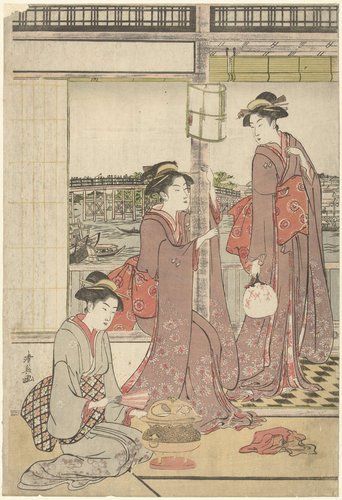
**Maanfeest** by Torii Kiyonaga, created between 1785 and 1789, is a striking color woodcut measuring 386 mm high by 262 mm wide. Kiyonaga, a master the ukiyo-e during Japan's Edo period, belonged to the renowned Torii school, famed for its vibrant depictions of kabuki actors and beautiful women. This print exemplifies the "floating world" genre, capturing ephemeral pleasures like festivals and theater life amid urban bustle. Color woodcuts like this one, known as *nishiki-e* or "brocade pictures," revolutionized Japanese printmaking through intricate multi-block techniques. Artisans carved separate woodblocks for each color—often up to a dozen—allowing Kiyonaga's elegant, elongated figures and dynamic compositions to burst with life. Produced in the late 18th century, these affordable prints democratized art, adorning homes from merchants to samurai. "Maanfeest," suggesting a moon festival (*tsukimi*), likely evokes seasonal revelry under Japan's harvest moon, blending cultural ritual with Kiyonaga's sophisticated style. Its historical significance lies in bridging the Torii school's actor portraits with the graceful bijin-ga (beauty prints) that influenced global art, from Impressionism to modern design. A window into Edo-era joy!
About the Artist
Torii Kiyonaga · 1752–1815
Torii Kiyonaga, born Sekiguchi Shinsuke in 1752 in Uraga, Sagami Province, was the son of an Edo bookseller who owned tenements near a bustling fish market. At age 14 in 1765, he began his apprenticeship under Torii Kiyomitsu, the third-generation head of the prestigious Torii school of ukiyo-e, renowned for kabuki theater illustrations and signage. Adopted into the Torii family, Kiyonaga succeede...