Ctrl K
1752–1815
Torii Kiyonaga, born Sekiguchi Shinsuke in 1752 in Uraga, Sagami Province, was the son of an Edo bookseller who owned tenements near a bustling fish market. At age 14 in 1765, he began his apprenticeship under Torii Kiyomitsu, the third-generation head of the prestigious Torii school of ukiyo-e, renowned for kabuki theater illustrations and signage. Adopted into the Torii family, Kiyonaga succeeded his mentor upon Kiyomitsu's death in 1785, assuming formal leadership of the school in 1787 and training pupils like Torii Kiyomine, who later took over.
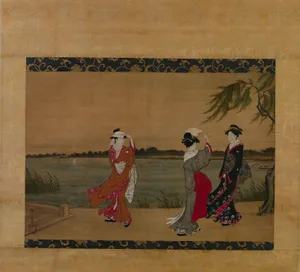
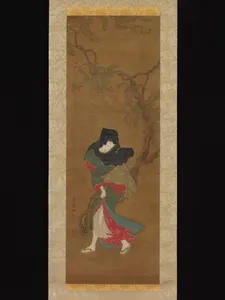
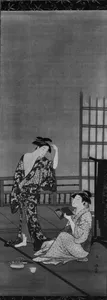
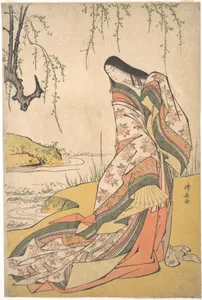
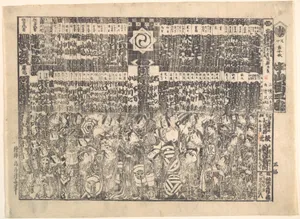
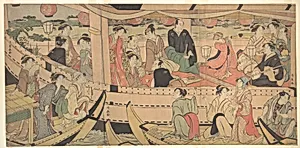
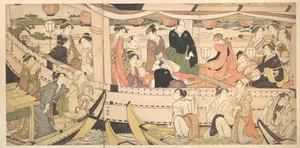
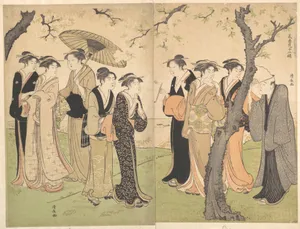
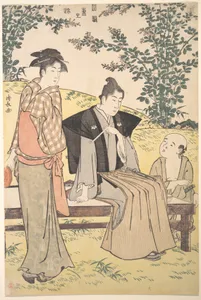
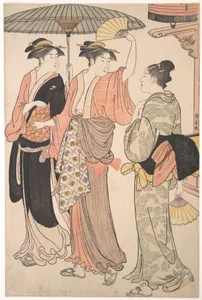
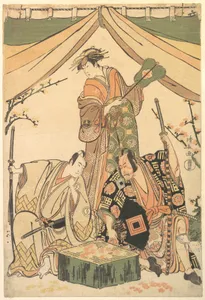
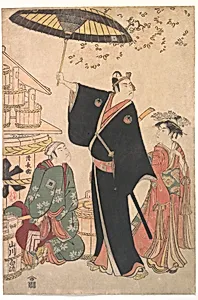
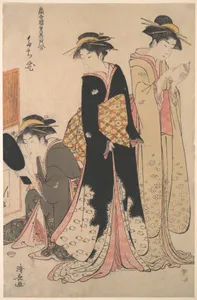
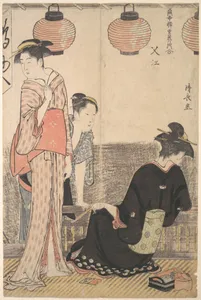
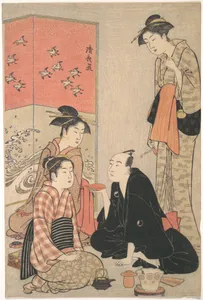
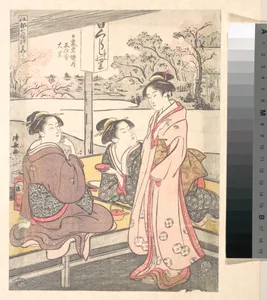
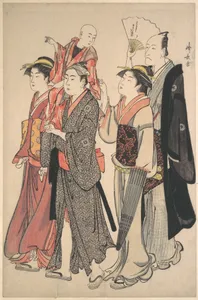
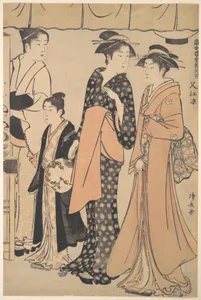
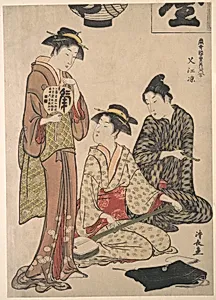
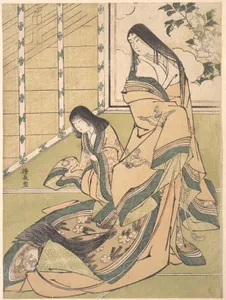
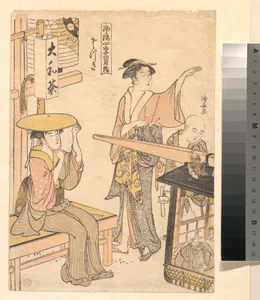
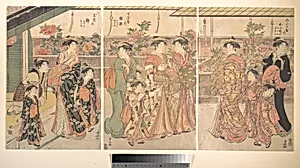
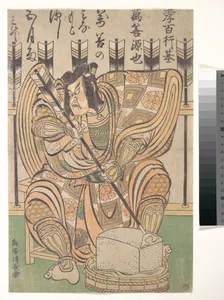
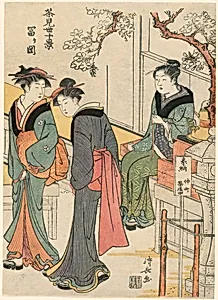
Working in the Torii school tradition, Kiyonaga elevated ukiyo-e during its golden age, mastering full-color nishiki-e prints of bijin-ga—elegant depictions of courtesans and beautiful women from pleasure quarters. His figures stood tall and stately, with fuller, more mature proportions than predecessors like Suzuki Harunobu, set against scenic backgrounds employing Western perspective in multi-sheet ōban compositions (diptychs and triptychs). He also produced realistic kabuki actor prints, theater billboards, shunga erotica, and illustrated books, innovating with on-stage musician depictions and vital groupings that captured everyday grace and drama.
Among his masterpieces are the series *Minami jūniko* (“Twelve Months at the Gay Quarters,” c. 1783–1784), featuring prints like “Eleventh Month” (c. 1783) and “Sixth Month” (c. 1784); *Fūzoku azuma no nishiki* (“Life of Women Not Belonging to the Gay Quarters,” 1783–1784); and *Snowball Fight* from *Children at Play in Twelve Months* (1787). Other highlights include *Tōsei yūri bijin awase* (“A Contest of Fashionable Beauties”), *Ehon Monomigaoka* (1785), and *Enjoying the Evening Cool on the Riverbed at Shijo Gawara*. By the early 1790s, as Kitagawa Utamaro rose in bijin-ga, Kiyonaga shifted to surimono, book illustrations, and painting, producing his last known print in 1813.
Kiyonaga's legacy endures as the preeminent bijin-ga artist of the 1780s, bridging Harunobu's intimacy and Utamaro's refinement while dominating Torii's theater monopoly. His oeuvre, with over 370 known works in our collection alone, influenced generations and graces institutions worldwide, even appearing on Japanese stamps commemorating his 250th birth anniversary in 2003.