
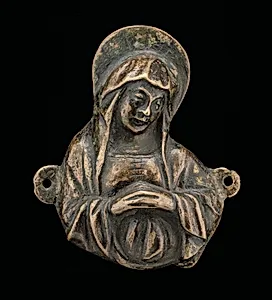
Madonna
c. 1500
Medium
gilded bronze
Dimensions
overall (without loops): 5.2 x 3.5 cm (2 1/16 x 1 3/8 in.) accessory size: 5.7 x 6.3 cm (2 1/4 x 2 1/2 in.) gross weight: 41.000 gr
Classification
Sculpture
Department
CSD
Museum
National Gallery of Art, Washington, D.C.
Credit
Widener Collection
Accession Number
1942.9.252
Rights
Public Domain
Art Historical Context
This delicate gilded bronze sculpture, titled simply *Madonna* and created around 1500 by an anonymous North Italian artist, exemplifies the intimate devotional art of the Renaissance. Measuring just over two inches in height, the piece was likely intended for private worship, perhaps as a portable shrine element or personal treasure. Its compact scale and the presence of loops suggest it may have been designed to be worn or affixed, allowing the faithful to carry a sacred image close at hand. During the early sixteenth century, northern Italy flourished as a center of bronze casting, where artists blended classical techniques with Christian themes. The gilding process—applying a thin layer of gold over the cast bronze—elevated the work’s spiritual resonance, catching light to evoke divinity and heavenly grace. Such small-scale sculptures reflect the Renaissance interest in personal piety, influenced by humanist thought that encouraged individual reflection on faith. Housed in the National Gallery of Art’s Widener Collection, this *Madonna* offers visitors a glimpse into the era’s masterful metalwork and the enduring appeal of the Virgin as a symbol of compassion and protection.