
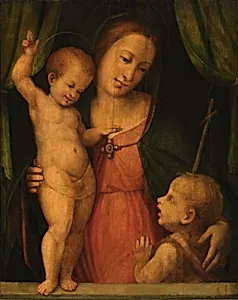
Madonna
ca. 1500-1550
Medium
Painting
Classification
Painting
Department
Smithsonian Collection
Museum
Smithsonian American Art Museum
Credit
Smithsonian American Art Museum, Bequest of Mabel Johnson Langhorne
Accession Number
1956.11.7
Rights
Public Domain
Tags
Art Historical Context
Behold the serene *Madonna* by the Master of Serum, an enigmatic Italian artist active around 1500–1550. This captivating painting depicts the Virgin Mary tenderly cradling the Christ Child, accompanied by the young St. John the Baptist—a devotional theme from the Renaissance era. Created during a time when Italy's artistic centers like Lombardy flourished with religious imagery, the work exemplifies the anonymous "master" tradition, where painters were identified by their distinctive styles rather than names. The painting's historical significance lies in its embodiment of High Renaissance ideals: graceful figures, emotional intimacy, and a focus on sacred motherhood that resonated deeply with worshippers. Though the exact medium details are unrecorded, such works typically employed tempera or early oil on panel, allowing for luminous flesh tones and intricate drapery that draw viewers into a moment of divine tenderness. As part of the Smithsonian American Art Museum's collection, bequeathed by Mabel Johnson Langhorne, it bridges European Renaissance mastery with American collecting passion. This piece invites contemplation of faith and humanity, reminding us how art from five centuries ago still whispers timeless stories of love and redemption. (198 words)