
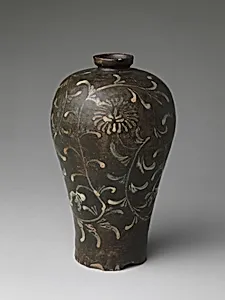
청자 철채 국화 무늬 매병 고려|青磁鐵彩菊花文梅瓶 高麗|Maebyeong with chrysanthemum decoration
Unknown Artist
13th century
Medium
Stoneware with iron-brown and white-slip decoration of chrysanthemums under celadon glaze
Dimensions
H. 10 3/4 in. (27.3 cm); Diam. 6 3/8 in. (16.2 cm)
Classification
Ceramics
Culture & Period
Korea · Goryeo dynasty (918–1392)
Department
Asian Art
Museum
Metropolitan Museum of Art, New York, NY
Credit
Gift of Samuel T. Peters, 1915
Accession Number
15.29.1
Rights
Public Domain
Art Historical Context
This exquisite *Maebyeong with chrysanthemum decoration*, in the 13th century during Korea's Goryeo dynasty (918–1392), the pinnacle of celadon pottery. Standing at 10 3/4 inches tall with a 6 3/8-inch diameter, this stoneware vase features delicate iron-brown and white-slip designs of blooming chrysanthemums beneath a signature celadon glaze. The maebyeong form—a graceful, pear-shaped plum vase—was prized for holding wine or floral arrangements, blending utility with artistry in aristocratic households. Goryeo celadon, renowned for its luminous jade-green hue achieved through iron in the glaze fired at high temperatures, marked a technical triumph influenced by Chinese Song dynasty wares but elevated by Korean innovation. Artisans here mastered inlaid slip techniques (known as *sanggam*), incising motifs into the clay body, filling them with contrasting slips, and glazing over for a seamless, crackled surface. The chrysanthemum motif evokes autumnal elegance, longevity, and scholarly refinement, symbols cherished in East Asian culture. A gift to the Metropolitan Museum of Art in 1915, this anonymous masterpiece from the Asian Art collection highlights Goryeo's golden age of ceramics, when such pieces were exported across Asia, rivaling the finest imperial porcelains. Visitors, admire how its subtle glow captures the dynasty's poetic harmony of nature and craft.