
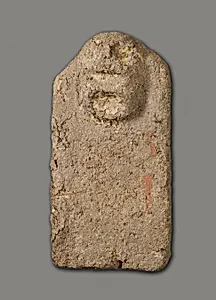
Magical Figure
Unknown Artist
ca. 1802–1550 B.C.
Medium
Clay (unfired)
Dimensions
h. 7 cm (2 3/4 in); w. 3.5 cm (1 3/8 in)
Classification
figure, magical, execration, tablet
Period
Late Middle Kingdom–Second Intermediate Period
Department
Egyptian Art
Museum
Metropolitan Museum of Art, New York, NY
Credit
Rogers Fund, 1933
Accession Number
33.1.111
Rights
Public Domain
Tags
Art Historical Context
This petite *Magical Figure*, crafted unfired clay around 1802–1550 B.C., hails from Egypt's Late Middle to Second Intermediate Period (Dynasty 13– Intermediate Period). Standing just 7 cm tall and 3.5 cm wide, this enigmatic artifact entered the Metropolitan Museum of Art Egyptian Art collection via the Rogers Fund in 3. During this era of political fragmentation and shifting powers—including the eventual Hyksos incursions—such small figures emerged as potent symbols of protection and ritual power, reflecting everyday Egyptians' reliance on magic amid uncertainty. Hand-modeled from soft, unfired clay, the figure's simple form and prominent facial features (highlighted in our tags) underscore its practical, non-elite origins. Unfired clay was ideal for quick production and ritual use, allowing the figure to be inscribed with spells, broken, or buried to activate its "magical" properties—perhaps serving as an apotropaic guardian against evil or a servant in the afterlife. Today, this unassuming object reveals the intimate spirituality of ancient Egypt's turbulent times, bridging art and daily devotion. Visitors, imagine carrying such a talisman for safeguarding your world!