
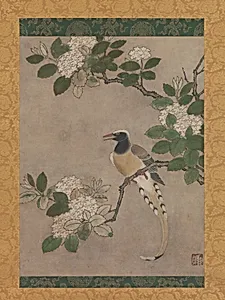
元賀筆 ガマズミ属に山鵲図|Magpie on Viburnum Branch
early 16th century
Medium
Hanging scroll; ink and color on paper
Dimensions
Image: 18 1/4 in. × 14 in. (46.3 × 35.5 cm) Overall with mounting: 53 1/2 × 19 1/2 in. (135.9 × 49.5 cm) Overall with knobs: 53 1/2 × 21 1/2 in. (135.9 × 54.6 cm)
Classification
Paintings
Culture & Period
Japan · Muromachi period (1392–1573)
Department
Asian Art
Museum
Metropolitan Museum of Art, New York, NY
Credit
H. O. Havemeyer Collection, Bequest of Mrs. H. O. Havemeyer, 1929
Accession Number
29.100.514
Rights
Public Domain
Tags
Art Historical Context
In the serene tradition of Muromachi period (1392–1573) Japan, this hanging scroll, *Magpie on Viburnum Branch*, painted by Genga in the early 16th century, captures a delicate moment in nature. Rendered in ink and color on paper, the intimate image measures just 18¼ × 14 inches, inviting close contemplation. Hanging scrolls like this were prized possessions, unrolled for seasonal display in tea rooms or alcoves, evoking the fleeting beauty of birds and blooms central to Japanese aesthetics. Genga's work exemplifies the bird-and-flower genre (kachōzu), a hallmark of Muromachi painting influenced by Chinese literati traditions and Zen simplicity. The magpie perched on a viburnum branch symbolizes joy and good fortune in East Asian lore, while the plant's berries and leaves suggest autumnal harmony. Delicate ink washes and subtle colors create depth and vitality, blending meticulous observation with poetic restraint—a technique that bridged courtly elegance and emerging ink monochrome styles. Acquired through the H.O. Havemeyer Collection and now in the Metropolitan Museum of Art's Asian Art department, this scroll offers a window into Japan's refined cultural life, where art celebrated nature's rhythms amid turbulent times. Visitors will appreciate its timeless whisper of life's joys.