
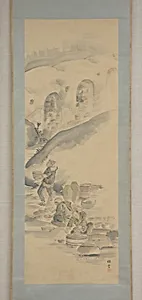
永樂保全筆 「陶造」|Making Ceramics
first half of the19th century
Medium
Hanging scroll; ink and color on paper
Dimensions
Overall: 47 1/2 x 16 7/8 in. (120.7 x 42.9 cm) Overall with mounting: 67 x 21 3/4 in. (170.2 x 55.2 cm) Overall with knobs: 67 x 23 3/4 in. (170.2 x 60.3 cm)
Classification
Paintings
Culture & Period
Japan · Edo period (1615–1868)
Department
Asian Art
Museum
Metropolitan Museum of Art, New York, NY
Credit
Rogers Fund, 1918
Accession Number
18.77.4
Rights
Public Domain
Tags
Art Historical Context
This hanging scroll, *Making Ceramics*, offers a vivid glimpse into the world of Japanese pottery during the Edo period (1615–1868). Created by Eiraku Hozen, a distinguished Kyoto-based potter from the renowned Eiraku family, the work reflects the era’s deep appreciation for craft traditions. Hozen, active in the first half of the nineteenth century, was celebrated for his mastery of ceramic techniques, and here he turns his attention to documenting the very process that defined his life’s work. Rendered in ink and color on paper, the painting shows artisans engaged in various stages of ceramic production, highlighting the collaborative and labor-intensive nature of the craft. As a hanging scroll, it was designed for intimate viewing in a domestic or studio setting, allowing viewers to appreciate the rhythmic movements of the potters. Hozen’s insider perspective as both artist and practitioner lends authenticity to the scene, celebrating the skill and dedication behind everyday objects. Today housed in the Metropolitan Museum of Art’s Asian Art collection, the scroll serves as a valuable record of Edo-period craftsmanship. It reminds us how art and industry intertwined in Japanese culture, preserving both the human stories and technical knowledge of ceramic making for future generations.
About the Artist
Eiraku Hozen · 1795–1854
Eiraku Hozen (1795–1854) was a celebrated Japanese ceramic artist and the sixteenth-generation head of the Nishimura family, a Kyoto dynasty of potters whose work was closely associated with the tastes of the imperial court and the refined aesthetic culture of the ancient capital. Operating under the artistic name Eiraku — a name that would become synonymous with a particular style of elegant, tec...